Garage Door Conformity and the Threat of Wind-Borne Particles
A garage door looks straightforward from the street. It opens up, shuts, and disappears right into the history until something goes wrong. In Queensland, especially in cyclone-prone areas, that simplicity can be deceptive. A garage door is usually among the biggest moving components of a home, and if it stops working under wind stress, the repercussions can be far bigger than a dented panel or a noisy electric motor. A stopped working door can let wind thrill into the structure, lift roof cladding, damages ceilings, and scatter debris into bordering properties.
That is why garage door requirements matter so much. They are not simply paperwork, and they are not just for building contractors attempting to satisfy a conformity box. They are part of the sensible defence a home has against extreme weather condition. As soon as you have seen what a distorted door can do after a solid wind occasion, you stop thinking of it as a minor part. It enters into the structure envelope, with actual responsibilities affixed to it.
Why garage doors sit at the centre of wind risk
When high winds strike, the garage door is often the largest opening in your home and one of one of the most revealed. If it bows, spins, or is required open, stress goes into the building promptly. That modification in stress can create a chain reaction. Wall surfaces can be stressed, ceilings can raise, and roof covering components can divide. Because sense, the door is not simply a door. It is an obstacle that assists maintain the remainder of the structure stable.
The Queensland government has actually especially advised that garage-door failing can bring about major damages inside the structure and can create harmful wind-borne debris. That expression matters. Wind-borne debris is not an abstract term. It is what occurs when components of a structure, or things stored inside a garage, are picked up by solid winds and turned into projectiles. In a street of homes, that can promptly end up being a neighbourhood trouble rather than a single-property issue.
The sensible lesson is uncomplicated. If the door is not strong sufficient for the wind region, or if it has been damaged by age, rust, impact, or bad upkeep, it can come to be the factor where the building envelope paves the way. The damage typically begins there and after that spreads.
What compliance implies in Queensland
Queensland's building structure sits within the National Building And Construction Code, the Queensland Growth Code, the Building Act 1975, and the Structure Guideline 2021. That matters because it is the legal and technical framework that offers garage door standards their pressure. Standards Australia keeps in mind that Australian Criteria are voluntary unless referenced by legislation, and that is the critical difference. When a requirement is picked up by the regulatory structure, it stops being optional in practice.
For garage doors in cyclone-prone components of Queensland, the relevant criterion is AS/NZS 4505. Queensland Government support claims garage doors installed in influenced garage door resource areas since 2012 need to meet the wind-rated requirement, and older doors might not have enough toughness for cyclonic winds. That is a clear line in the sand. A door can look serviceable and still be insufficient for the conditions it might face.
This is where a great deal of confusion starts for proprietors. People often presume that since a garage door was set up skillfully, it has to still be certified. However compliance is not frozen in time. The structure might have been legal at installation, yet age, replacement components, electric motor changes, and general wear can all change the threat profile. A compliant door in 2012 can be a doubtful one today if it has not been preserved, fixed appropriately, or matched to later site conditions.
For owners in Queensland, the compliance concern is seldom academic. It is tied directly to wind region, construction duration, and the condition of the door assembly. If the site is exposed, the margin for error is thin.
Wind-borne particles is not just about the door itself
The expression wind-borne particles often makes people picture roofing iron, branch pieces, or loose exterior furniture. Those are real risks. However garage-door failing can produce debris also. A panel can escape. Tracks can distort. Bolts can stop working. Also components of the opener system can become risky if the door is compelled or the mechanism is damaged.
The larger concern is what occurs after the door gives way. When wind enters the garage, kept products enter into the danger. A device breast, storage containers, sporting equipment, or even light-weight home items can be displaced. I have actually seen garages where a storm left the front door intact but turned the interior into a mess of busted shelving and spread objects because the garage door had actually stopped working under stress. The structure itself was then hit again by its own contents.
That is why wind-rated garage door criteria are so crucial. They are not just about stopping the door from blowing in. They are likewise about minimizing the chance that the garage ends up being a source of flying particles. When individuals talk about strength, this is the kind of detail that frequently obtains missed.
A door that is implied to resist wind tons should be treated as part of the home's tornado envelope. If it is damaged, inadequately adjusted, or the incorrect type for the location, the threat increases swiftly. This is especially true in seaside and cyclone-exposed components of Queensland, where corrosion and repeated weather exposure can reduce the beneficial life of parts that would last much longer inland.
Choosing the best door is not just a style decision
There is a propensity to discuss garage doors as though the primary choice is look. Roller, sectional, tilt, colour, finish, insulation, smart controls, all of that issues. However in a wind-prone region, the very first question should be whether the door is ideal for the area and compliant with the required standard.
The sort of door can affect performance, maintenance, and fixing practicality. A sectional door may fit one constructing design much better, while a roller door may be chosen in one more. Turn doors have their very own technicians and restraints. The option should not be made on appearances alone, because the expense of getting it incorrect appears later, commonly during a severe weather condition event.
For lots of homeowner, the much better choice boils down to 3 practical questions. Is the existing door wind-rated for the area? Is it still in audio problem? And if it is not, does repair make sense or is replacement the more secure course? Those inquiries are typically addressed just after a correct examination, not from a quick glimpse from the driveway.
Here is the factor where industrial garage door repairs and residential repair work start to overlap in reasoning. Whether the property is a home, a warehouse, or a commercial site, the essential concern is lots, wear, and risk-free procedure. A door that is binding, out of alignment, or revealing deterioration may still operate on mild days, yet the actual test is how it behaves when problems become severe. That is where professional assessment earns its keep.
Maintenance that in fact alters the outcome
Compliance does not end when the door is installed. It lives or dies with maintenance. This is where numerous proprietors drift right into incorrect self-confidence. The door opens up. The electric motor still runs. The remote works. So it must be fine. That is not a reliable test.
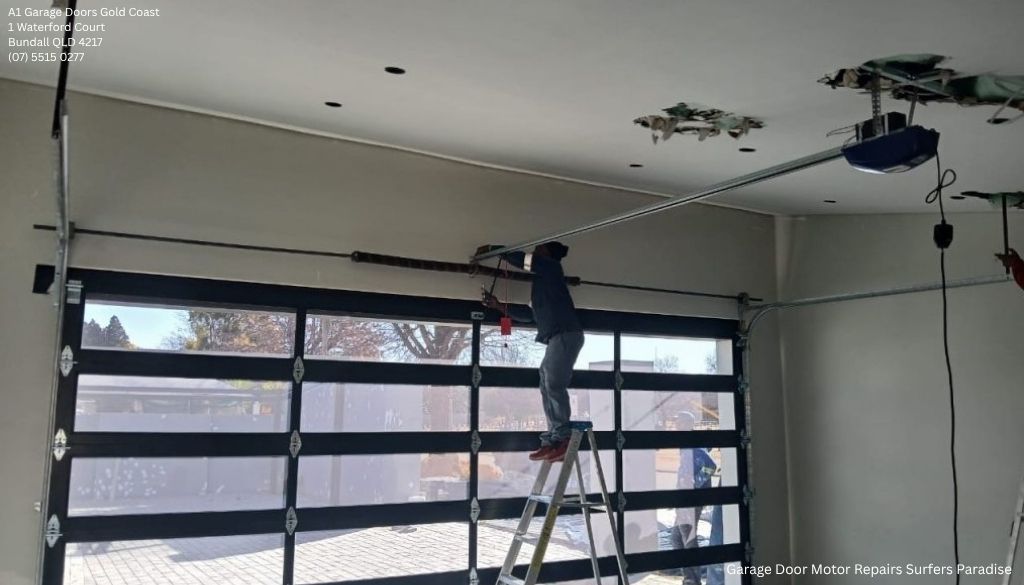
Manufacturers provide beneficial upkeep advice due to the fact that they understand where failures have a tendency to start. Gliderol, as an example, encourages normal expert servicing to support safety and life expectancy, says panel doors must be fueled oil every 3 to 6 months, and suggests maintenance every 2 years, with more constant focus for seaside buildings. B&D keeps in mind that some residential doors and openers featured a service-linked service warranty plan that depends on maintenance within the very first twelve month and after that at least every two years. Those conditions are not just warranty small print. They are a clue regarding how rapidly neglected elements can drift out of spec.
Maintenance issues most in places where deterioration, salt air, and warm job against hardware. A seaside residential property can show use long before a comparable door inland does. Springs lose stress, rollers end up being noisy, cords age, and fasteners corrode. A door might still move, but it may no more move securely or equally. If the opener is lugging greater than its share of the tons, put on accelerates.
Professional maintenance is beneficial because it captures the concerns a house owner normally does not see. Track positioning, spring problem, cord wear, bracket exhaustion, fastener corrosion, and panel anxiety are not always noticeable from ground level. A professional can additionally recognize when the electric motor is making up for a much heavier or rougher door than it must be handling.
A functional maintenance rhythm generally comes down to these 5 checks:
- Test the door's equilibrium and movement.
- Inspect springtimes, cords, rollers, and brackets.
- Check for corrosion, deterioration, or influence damage.
- Confirm the opener is attached and operating correctly.
- Verify the door still matches the wind and website conditions.
That kind of routine is moderate compared with the cost of post-storm repair service, ceiling damage, or a fallen short warranty claim.
Repair, substitute, and the difficult telephone calls proprietors need to make
People frequently ask whether they must repair an existing door or change it. There is no global response, however there are clear patterns. If a door has a basic mistake, such as a detached opener, a level battery in the remote, or a small modification issue, repair work might be practical. B&D's own troubleshooting assistance points out that some typical grievances are extremely fundamental and may boil down to batteries or a disconnected opener. That claimed, when the problem touches springtimes, cables, architectural distortion, or deterioration, the choice ends up being even more serious.
A garage door fixing is not just about getting it relocating again. It has to do with bring back risk-free operation and, roller door repair gold coast in cyclone-prone areas, restoring the ideal degree of resistance. If a door precedes present needs, has actually been patched repeatedly, or shows ongoing deterioration, replacement can be the much more defensible option. That is especially true if the current door is older and there is uncertainty about whether it fulfills the pertinent wind rating.
The replacement choice typically comes down to whether the existing structure is still worth bringing back to requirement. If panels are damaged, equipment is exhausted, and the opener is already near completion of its life, stacking repair services can set you back more than a scheduled substitute. Owners in some cases chase one fix after one more because each private problem appears workable. The problem is that garage doors work as a system. If the door, tracks, springtimes, and opener are all jeopardized in different means, the system ends up being unstable even when each issue looks tiny on its own.
In bigger homes and commercial setups, the risks are even more evident. Industrial garage door repairs generally require to think about operational downtime, security, security, and the lots the door need to stand up to. There is little garage door repairs near me prices worth in repeatedly patching a door that can not be counted on bad weather or under regular use. The very same concept relates to homes, even if the scale is different.
The quieter problem of deterioration and seaside wear
Corrosion does not attract attention up until it has already done its job. It begins on bolts, joints, springtimes, and sides. After that it relocates right into the parts that hold the system with each other. For homes near the shore, this is just one of the main reasons routine maintenance issues so much. The air is harsher, the setting is much less forgiving, and steel elements age faster.
What makes corrosion dangerous is not just the visible corrosion. It can lower the stamina of vital components long before a house owner notifications. A door might still look tidy from the road and still be prone in a storm. That void between appearance and performance is where several failures begin.
A maintenance schedule that suits an inland residential or commercial property may not be enough on the coastline. A lot more frequent examination, timely substitute of rusted elements, and right lubrication all help. None of that is extravagant, however it is what keeps the door from coming to be a weak point.
There is additionally a human aspect here. Owners often delay servicing since the door still appears to function. Technically, that may hold true. Virtually, it might be developing a failing pattern that just reveals under stress. The real examination is not whether it opens today. The real examination is whether it will remain undamaged when the weather condition turns.
Smart controls and openers serve, yet they are not the core defence
Modern openers and wise controls are useful. They make accessibility simpler, boost benefit, and can add useful indications. B&D says some opener designs include a service indicator light, which is a reasonable feature since it reminds the owner that maintenance is due. But it is simple to overestimate the duty of smart functions. They do not replace structural compliance, and they do not make an under-rated door wind-resistant.
A brand-new opener can improve everyday usage, particularly when the old motor is struggling. It can likewise make the door much safer to operate if the previous system was undependable. But if the door itself is not appropriate for the setting, a brand-new motor just resolves component of the problem. It is a support group, not the main shield.
That is why a proper upgrade discussion should check out the whole setting up. Door problem, equipment, opener, compliance condition, upkeep background, and website exposure all belong in the exact same conversation. Splitting them apart has a tendency to generate pricey half-measures.
What an owner ought to be asking prior to the next storm season
A garage door ought to not be evaluated only when something breaks. By the time there shows up damage, the weather condition may currently have exposed a weak point that should have been dealt with earlier. Owners in Queensland, particularly in cyclone-prone areas, improve end results when they treat the door as a durability thing rather than a convenience item.
The most valuable questions are the ones that require a functional answer. Was the door installed to the wind-rated requirement required for the area? Has it been serviced on schedule? Exist indicators of rust, distortion, or extreme wear? Is the opener lugging a door that is also heavy or as well harsh for it? And if the door is older, is it still worth repairing, or is replacement the better investment?
Those inquiries are not academic. They go directly to safety, property security, and whether the garage door is aiding or threatening the structure in a wind event. In the wrong problems, a weak door can end up being the begin of a very costly domino effect. In the ideal problem, a certified, properly maintained door does peaceful work that most people never notice, which is exactly what a protective obstacle must do.